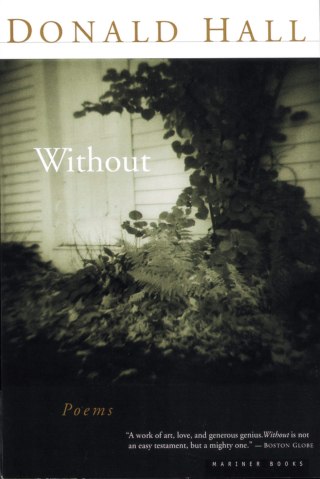
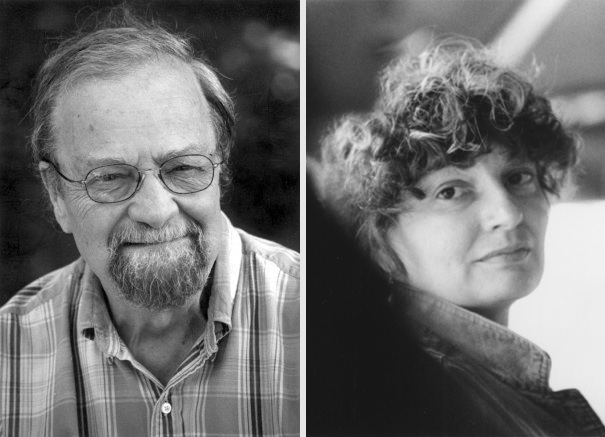
Asked to name the best year of their 23-year marriage, Donald Hall thought he and Jane Kenyon would have chosen “the one we remember least.” In “The Third Thing,” an essay published in Poetry in autumn 2004, Hall explained that choice through an ordinary working day at his family’s New Hampshire farmhouse, where the two poets lived for two decades.
Hall brought Kenyon coffee in bed. While she walked the dog, he began writing; when she returned, she went upstairs to work on her own poems. Later he might read aloud to her, or they would play ping-pong without keeping score. Hall called the things that drew their attention in the same direction “third things.” A game could serve as well as a poem. What mattered, in his account, was that two people could take pleasure in something together without giving up their separate ways of attending to it.
For ten summers, Eagle Pond served that purpose. Kenyon dozed in the sun while Hall read in the shade, sometimes stopping to make a note. From time to time they swam. When a landfill leak spoiled the pond, they lost those afternoons, but poetry remained part of their daily life.
After the death of someone they loved, Hall often read Kenyon “The Exequy,” which Henry King wrote in the seventeenth century after his young wife died. Hall made a distinction about what such a poem could offer: “not release from grief but companionship in grief.”
During Kenyon’s illness with leukemia, Hall noticed from the hospital that the leaves were turning. He had missed their arrival on the trees. He began writing “Without” to capture what time felt like at her bedside. Kenyon died at 47; the poem became the title work of Hall’s 1999 collection. But before it belonged to a book, it had a reader. After many drafts, Hall read it aloud to Kenyon. Her verdict, as he remembered it: “That’s it, Perkins.”