A painting offers a view of the whole composition before the viewer settles on a detail. A book offers no such first glance. For Vladimir Nabokov, that difference explained why a second reading could give a reader something the first could not.
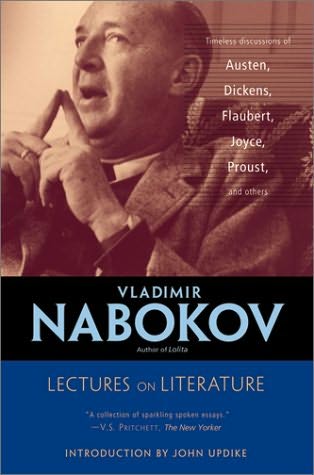
In Lectures on Literature, Nabokov recalls an exercise he set for students at a college he visited on an extended lecture tour. He gave them ten possible answers to the question of what makes a good reader and asked them to choose four. By his account, the students tended to favor identifying with a character, reading for action, or approaching a book through its social, economic or historical setting. Nabokov’s own choices were imagination, memory, a dictionary and artistic sense. That last quality, he added, was one he hoped to develop in himself as well as in others.
His case for rereading turned on the time it takes to get to know a book. On a first reading, the reader must follow one line after another just to discover what the book is about. On a second, third or fourth reading, the reader still encounters those lines in sequence, but can hold the whole work in mind while attending to a particular passage. For Nabokov, that was the book’s nearest equivalent to looking at a painting: the detail is there on the first encounter, but knowing the composition changes what one can see in it.