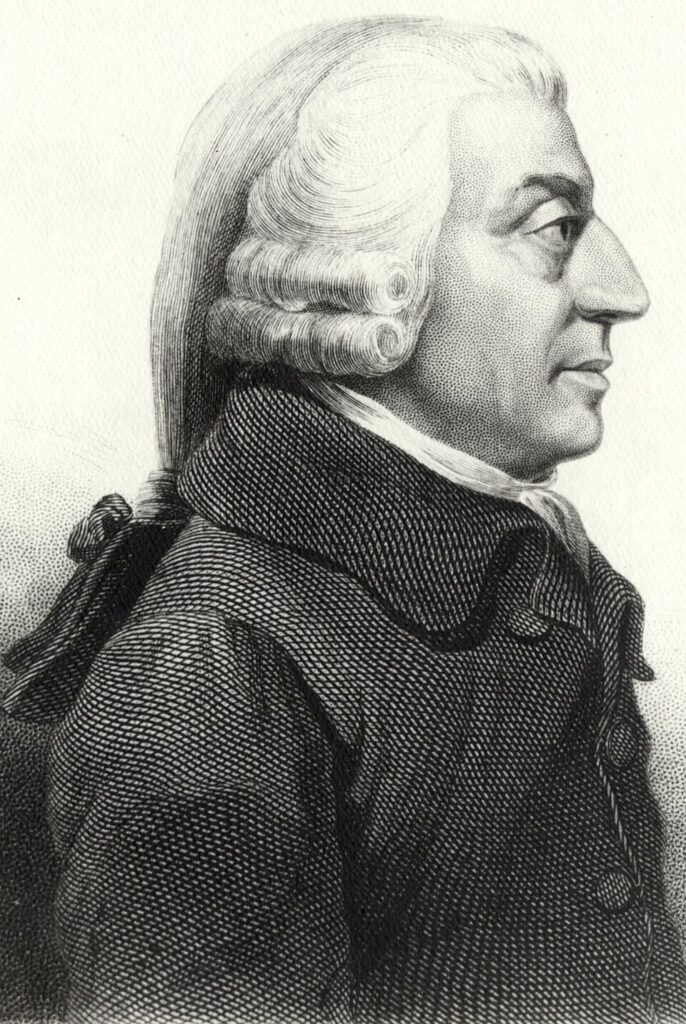
When Yan Fu translated Adam Smith’s The Wealth of Nations in 1901, he wanted readers to consider what made a country wealthy at a moment when China’s own future seemed precarious. In the 1930s, Guo Dali and Wang Yanan turned to the same book for a different reason: they wanted to translate Karl Marx’s Capital, and believed they first had to understand the classical economists Marx had read.
Writing for the 250th anniversary of Smith’s 1776 book in 2026, Guo Qing, Lü Shisheng and Su Tianqi count more than 80 Chinese translations, excluding illustrated editions and versions for children. Their account traces how translators’ purposes shaped the language they chose, the notes they included and the readers they hoped to reach.
Before the first translation
Smith’s ideas had reached Chinese classrooms before his book appeared in Chinese. At the Tongwen Guan in Beijing, students used Fuguo Ce, a work translated by the American missionary W. A. P. Martin and Wang Fengzao. It introduced Smith in a discussion of how wealth was produced, used and exchanged. Other translated works credited his ideas with helping to explain Britain’s prosperity.
For Yan Fu, writing after China’s defeat in the First Sino-Japanese War, the pressing question was what such learning could offer China. His translation, Yuan Fu, used a classical literary style that could reach readers steeped in the Chinese intellectual tradition as well as those already seeking out Western scholarship. The authors date his translation to 1901, 125 years after Smith’s book appeared. The Museum of Commerce at Shanghai University of Finance and Economics holds a copy of the first edition, published in 1902 by the translation bureau of Nanyang Public School.
Reading Smith to understand Marx
When Guo Dali and Wang Yanan began their work, no complete Chinese translation of Capital was available. The two Marxist economists produced the first Chinese translation of The Wealth of Nations in the modern vernacular. They stayed close to Smith’s text while making it accessible to readers for whom Yan Fu’s classical prose posed a barrier.
In the authors’ account, Smith was then read chiefly as an intellectual predecessor of Marx. A 1965 retranslation made that perspective explicit, presenting the book as a representative work of bourgeois classical political economy to be studied critically.
Reading Smith in market economies
In Taiwan, economists Zhou Xianwen and Zhang Hanyu worked from Edwin Cannan’s annotated edition and drew on Japanese scholarship. Their translation, the first produced in Taiwan, was published in 1964 by the Bank of Taiwan’s economic research department to open a series of economics classics. As Taiwan pursued export-led development, the authors argue, Smith’s treatment of free markets offered a theoretical reference for economic policymakers.
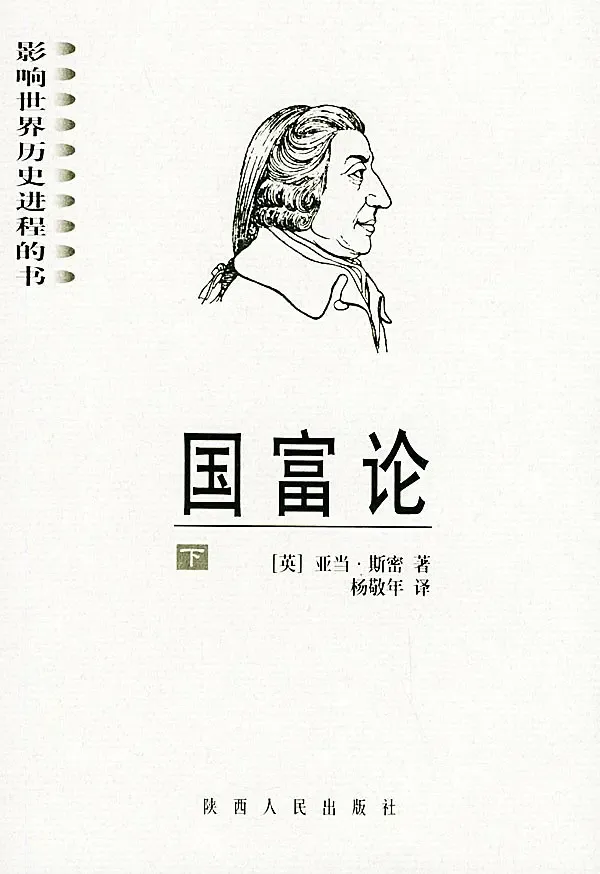
On the mainland, the shift from economic planning toward a socialist market economy brought fresh interest in Smith’s explanations of prices and competition. In 2001, Shaanxi People’s Publishing House published a new translation by the economist Yang Jingnian. Like Zhou and Zhang, Yang used Cannan’s edition. He translated its summaries and notes and added a reader’s guide of his own. Despite its scholarly apparatus, the edition became a bestseller.
For Guo, Lü and Su, the question in the anniversary year is no longer simply the one that preoccupied Yan Fu: how does a nation become rich? They argue that Chinese scholars can also read Smith critically when considering how prosperity is shared. That is their case for revisiting the book in 2026, distinct from the reasons earlier translators brought it to their readers.