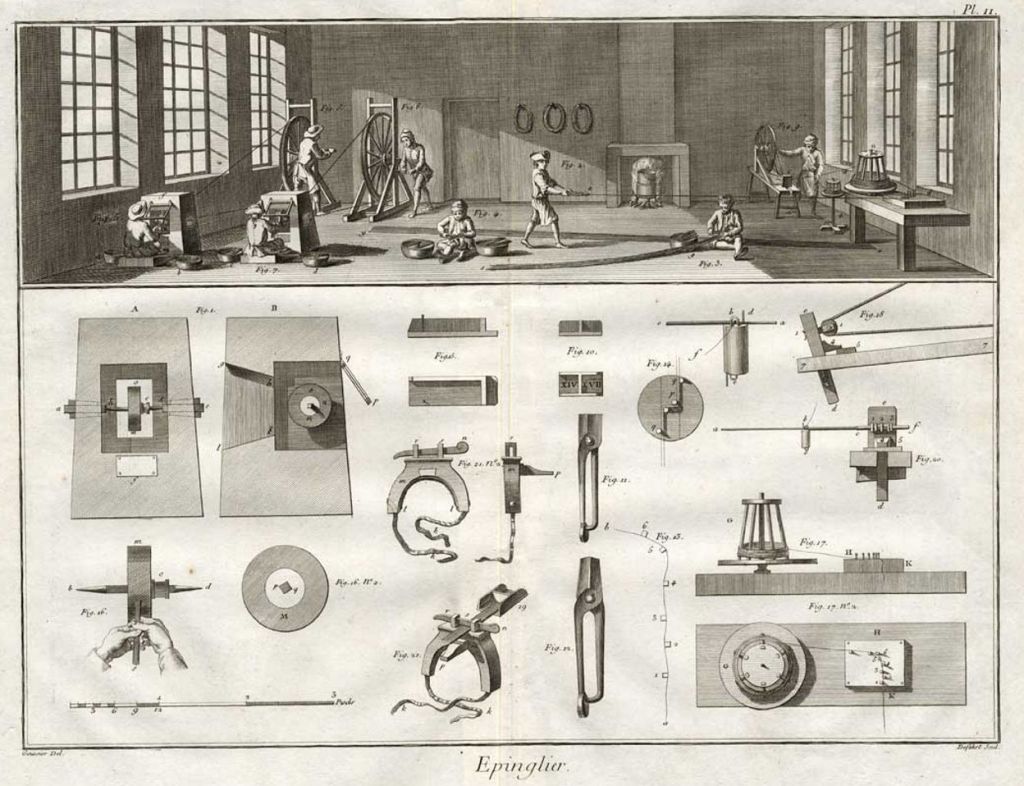
In a Glasgow pub in June 2026, two local women asked a group of visiting scholars what Adam Smith believed. Told that he thought free trade could improve the lives of poor people, the women had a follow-up question: “Was Smith a socialist?”
The scholars had come to Smith’s alma mater, the University of Glasgow, for a conference organized by the International Adam Smith Society and the British Academy to mark 250 years since the publication of The Wealth of Nations. In an essay recounting the exchange, one participant answers: not in the strict sense. Smith defended private property and did not prescribe how wealth should be redistributed. But to understand his case for a commercial society, the essayist argues, it matters whose circumstances he thought it would improve.
A defense of trade, not of traders
The “invisible hand” appears just once in The Wealth of Nations and once in The Theory of Moral Sentiments. In the essayist’s reading, the metaphor describes how pursuing a private interest can advance a public one. It is not an explanation of how prices adjust, much less a promise that merchants will act for the common good. Its prominence owes much to later Chicago economists, including Milton Friedman and George Stigler.
Book I of The Wealth of Nations ends not with praise for merchants but with advice about what to do when they propose a commercial law: examine it with particular care. A merchant has good reason to want both a larger market and fewer competitors, Smith observed. The public might benefit from the former. The latter allows sellers to charge their fellow citizens more.
Smith recognized that merchants and manufacturers put capital to productive use and employed people who depended on wages. But workers and employers did not bargain on equal terms. Employers generally had the advantage and wanted to keep wages down. In a growing economy, however, employers competing to hire workers could bid wages up, even as competition among those investing capital tended to push profit rates down. On Smith’s account, a fall in merchants’ returns need not signal that a country was doing badly. Its workers might be doing better.
What a philosopher and a porter have in common
Smith asked readers to consider the apparent gulf in ability between a philosopher and a porter. Much of the difference, he argued, arose from habit, education and years spent doing different work. The philosopher’s vanity made it difficult for him to recognize how much he had once resembled the porter. The essayist sees a moral claim here as well as an observation about learning: differences produced by occupation are no grounds for treating one person as naturally more deserving than another.
Specialization nonetheless carried a cost. In Book V of The Wealth of Nations, Smith described a worker whose occupation consisted of repeating one or two simple operations. There might be little occasion to solve an unfamiliar problem or devise a better method. A person could become highly skilled at a particular task while losing the habit of exercising judgment elsewhere.
That danger helps explain why Smith counted public education among the state’s responsibilities. He proposed public schools for ordinary workers and their children, and examinations that would make basic learning a condition of entry into occupations. These were proposals, not a compulsory education system already in force. For Smith, the same division of labor that made goods more plentiful also gave the state a reason to attend to the education of the people who produced them.
The difference between earning a living and asking a favor
Smith’s comparison was with a society in which a poor person’s livelihood could depend on the goodwill of a particular lord. A wage earner still needed other people, but could offer labor or goods in exchange rather than court a patron’s favor. For Smith, the gain was not self-sufficiency. It was the freedom that came from no longer depending on one person’s will. A later critic such as Karl Marx could point out that a worker free to sell labor might own nothing else to sell. Smith’s own judgment, the essayist notes, rested on a comparison with forms of dependence workers had known in the past.
Smith died in 1790. The essay’s closing question about artificial intelligence is therefore the author’s, not his: what happens if machines take over the repetitive work he found so damaging? Relief from monotonous tasks could give people more opportunity to develop their abilities. But if automation instead deprives them of paid work on a large scale, it could also take away the means by which they meet their needs without asking a favor. Read from the worker’s side of the exchange, The Wealth of Nations offers a reason to distinguish those two outcomes: being spared a burdensome task is not the same as losing an independent livelihood.