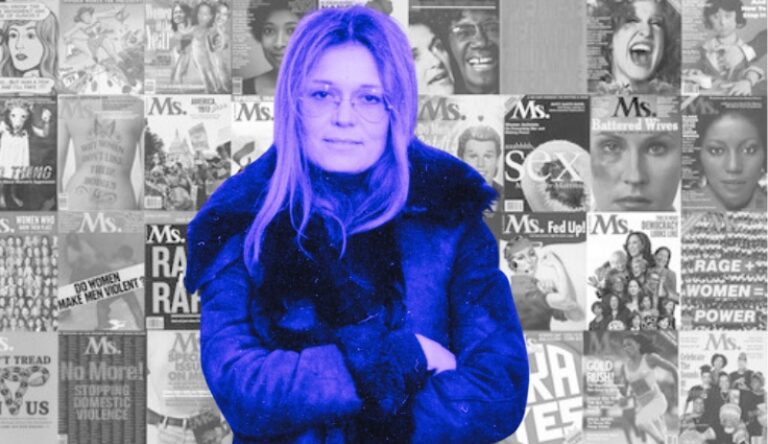
A meeting in Gloria Steinem’s Manhattan living room helped lead to the founding of Ms. magazine in 1971. More than half a century later, she was still hosting talking circles there. In the prologue to An Unexpected Life, her memoir published on September 22, 2026, she described what she wanted for the Upper East Side brownstone: a place where women of different backgrounds could meet or find a room when they needed one.
Steinem moved into a single apartment with a roommate in 1968. Over the years, her home expanded to occupy three floors, and the subjects discussed in her living room ranged from women’s health to misinformation in the media. In the memoir, she expressed the hope that she could acquire the remaining floors. On September 3, 2026, Gloria’s Foundation announced that the brownstone would continue to serve as a place for women to gather, organize and seek shelter.
Written as a collection of essays, An Unexpected Life draws on more than 60 years of organizing. Steinem, who died at 92, wrote that she intended to live to at least 100. Rather than treat the memoir as a farewell, she devoted parts of it to practical advice, down to a list of recommendations for organizers. One concerned who should speak for a movement: unless women of different racial backgrounds represented it publicly, she warned, people would get a distorted picture of its membership.
Steinem traced that conviction in part to the years she spent in India in her early twenties after graduating from Smith College. In a final essay published by The New Yorker after her death, she recalled that living in India changed her understanding of white people’s place in the world and taught her to value racial diversity. She was also struck by the influence of Indian women’s organizing on Gandhi’s nonviolent movement. For Steinem, racism and sexism had common roots and had to be challenged together. That was her stated position; the wider women’s movement drew criticism for marginalizing Black, working-class and LGBTQ+ women.
Steinem also used the history of Ms. to explain why she thought it worth looking back. Even at a magazine founded on feminist principles, editors struggled to feature women photographers: many could not afford the studio space or equipment that assignments required. By the time she wrote the memoir, women were among the most prominent photographers working for magazines. For Steinem, remembering the practical barriers made it easier to recognize what had changed without mistaking progress for a finished job. As she told Vanity Fair on her 92nd birthday, “hope is a form of planning.”