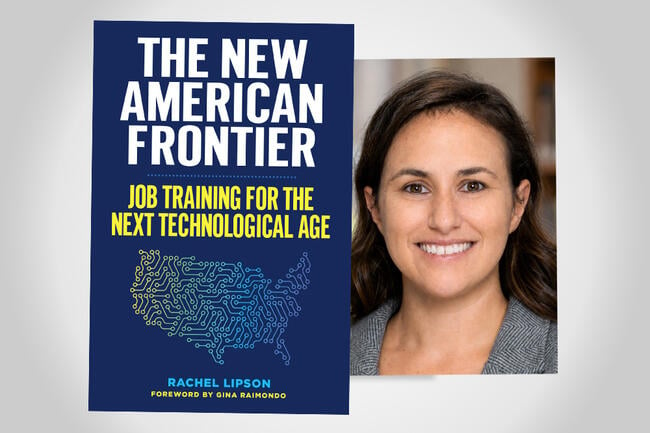
As data centers began opening in Virginia, a community college worked with industry to develop new coursework within its engineering technology program. It didn’t need to build a program from scratch. In The New American Frontier: Job Training for the Next Technological Age, Rachel Lipson identifies that approach as a feature of several of the most promising training programs she studied.
Lipson, a research fellow at Harvard Kennedy School and a former senior policy adviser in the U.S. Department of Commerce’s CHIPS program office, wrote the book for college leaders and policymakers. Published by Harvard Education Press, it examines how U.S. community colleges prepare technicians for work in electric vehicle manufacturing, semiconductors, cloud computing and quantum technologies.
In a November 24, 2026, interview with Inside Higher Ed, Lipson described why an advanced degree isn’t always the best preparation for a technical job. Some Colorado quantum companies founded by physicists had relied on Ph.D. researchers for tasks such as soldering wires. As their products approached market, the companies tried hiring physics graduates with bachelor’s degrees, only to find that the candidates had studied theory but lacked lab experience. At the community college Lipson described, students worked with machines from their first day in the lab. That early exposure to the work itself, she argued, is something four-year institutions could learn from.
For colleges deciding when to invest, the risk runs in both directions: a lab can take too long to get ready, or it can be ready well before the jobs arrive. Lipson sees noncredit and continuing education programs as useful places to try new training because they can adapt courses and already work with local employers. She also suggested that economic development agencies could share hiring plans from several companies in aggregate, giving colleges a clearer picture of demand without disclosing proprietary details.
Texas offers an example of what public funding can do. Lipson said the state’s Skills Development Fund brought Tesla and a community college together to plan training. The college’s engineering technologies department grew from three instructors to 43 by the time she wrote the book and to more than 80 by the interview. She attributed most of that growth to work funded through company partnerships.
Even when training leads to a job, Lipson noted, the college may get little credit: a student hired before finishing a certificate can count as a noncompleter. Funding formulas based on enrollment pose a different problem. An engineering lab requires equipment, space, close supervision and instructors who could earn high salaries in industry. Where a college receives the same funding per student for engineering technology as for English, those costs can leave the technical program running at a loss. Lipson said colleges she spoke with often used money from other programs to cover the difference.