A new routine can begin with determination and still be difficult to sustain. In a guide published on 22 July 2026, the author argues that the gap between intending to act and actually acting is often best addressed by changing the cues around a behaviour, rather than relying on motivation alone.
The guide describes a habit as a learned response triggered by a cue without much conscious deliberation. That does not mean an entire activity—such as cooking dinner or going for a run—happens on autopilot. The more practical aim is to make parts of the routine, especially the first step, easier to start.
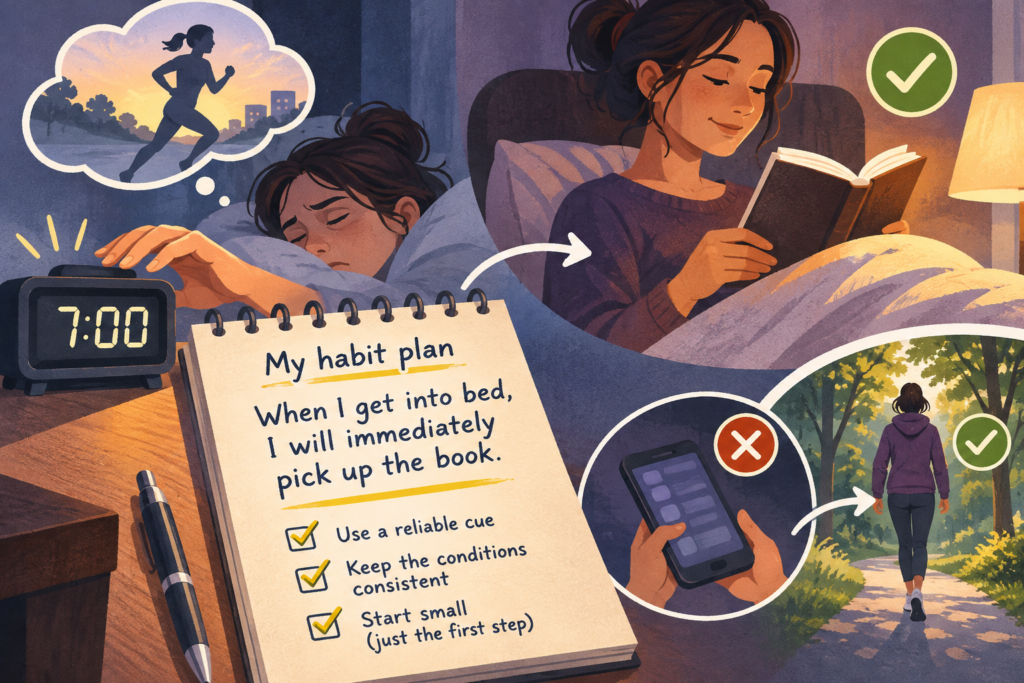
One suggested method is to write a specific plan: “When [cue], I will immediately [action].” Someone hoping to read at night, for example, could pair getting into bed with picking up a book. The action is deliberately smaller than a commitment to finish a chapter. For people whose schedules or locations vary, the guide suggests choosing a cue that remains reliable, such as brushing their teeth, rather than a fixed hour.
The author also recommends keeping the conditions around that first step consistent. A 2023 study cited in the guide analysed gym visits and hospital handwashing and found that habitual behaviour was strongly tied to predictable cues. The study did not establish a universal timetable for forming a habit: the guide notes that handwashing could become automatic within weeks, while the more complex sequence involved in going to the gym could take months. The familiar claim that a habit forms in 21 days should not be treated as a rule.
For an unwanted habit, the guide advises identifying both its trigger and the need it serves. Logging out of a distracting app, for instance, may create a pause in which to notice why the urge to open it arose. If reaching for a phone provides a break from demanding work, a short walk might serve as an alternative. Avoiding triggers and resisting urges can help, the author says, but may be difficult to sustain on their own.
The advice concerns everyday routines, not serious addictions. Its central distinction is between making the start of a behaviour more automatic and expecting every part of a complex activity to require no thought.