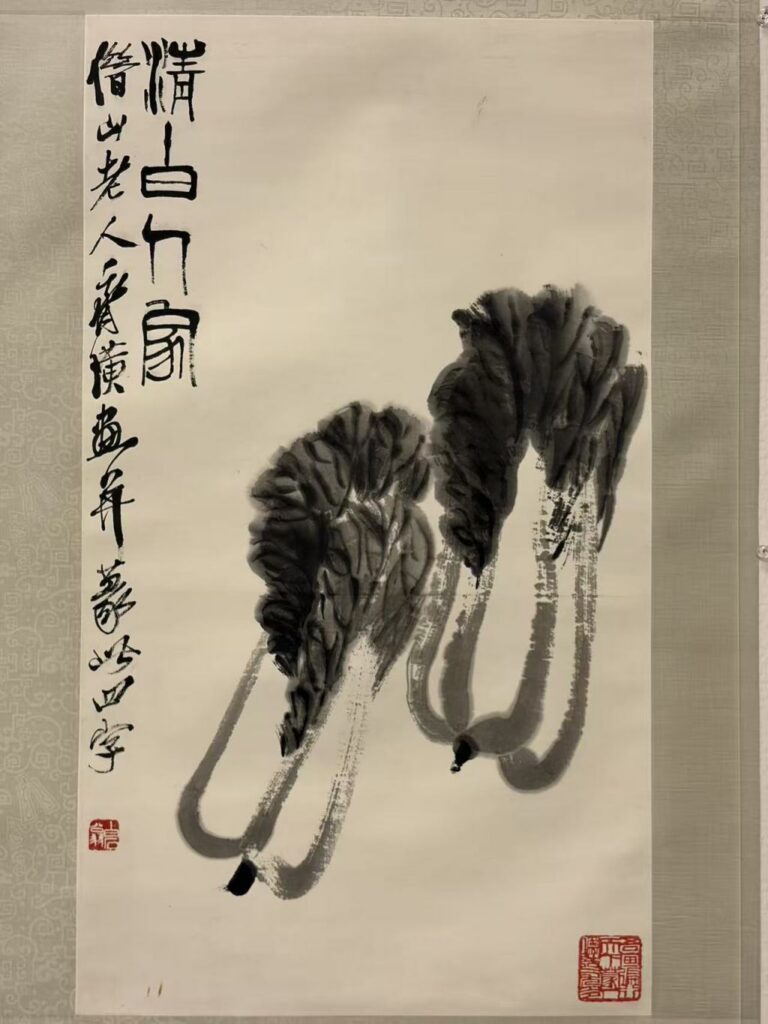
At the Central Academy of Fine Arts’ 2024 graduate exhibition, former academy president Jin Shangyi found no examples of da xieyi, or “great freehand” painting, among the Chinese painting graduates’ works. He saw little of its more restrained counterpart, xiao xieyi, either. Why, he asked, had the department turned so decisively toward gongbi, the meticulously detailed style?
Jin’s question prompted debate. So did a widely viewed clip from a lecture by academy professor Shao Yan that paired large brushes with da xieyi and small brushes with xiao xieyi. At its 2026 academic meeting, the Beijing Fine Art Academy devoted a roundtable to the history and present state of da xieyi. One speaker offered a test of the brush-size distinction: consider the Ming painter Xu Wei’s album leaves. The pages are small, and Xu generally used small brushes, yet his strokes sweep freely across the paper. What, the speaker asked, is small about the result?
What a few strokes can hold
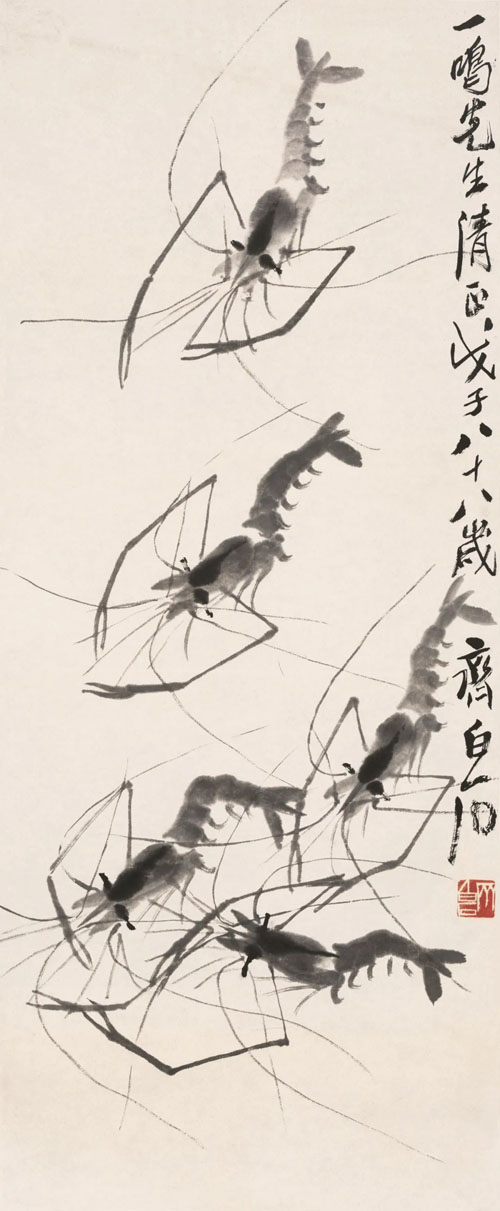
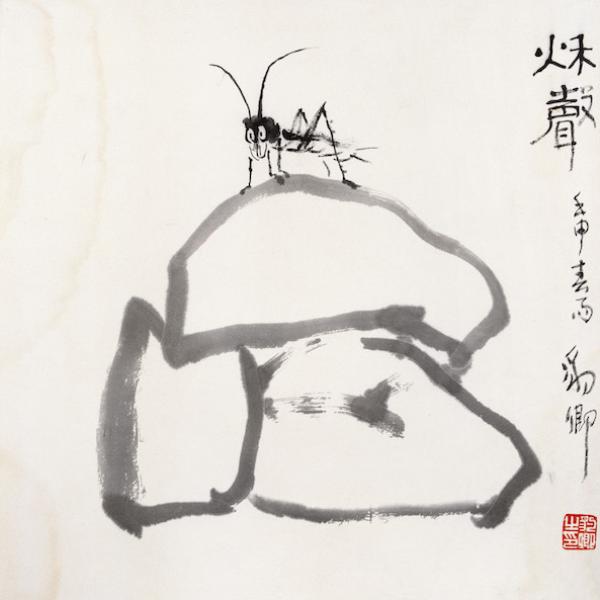
For the speaker, xieyi is better understood by asking what the painter seeks to express. An early use of the term in the Strategies of the Warring States suggests giving vent to what is within. The speaker read Xu Wei’s restless lines in light of his unsettled life, and the spare strokes of Bada Shanren, who lived through the loss of his family and the fall of a dynasty, as expressions of a fiercely guarded independence. On this reading, copying the outward looseness of either artist’s brushwork misses what gave it force.
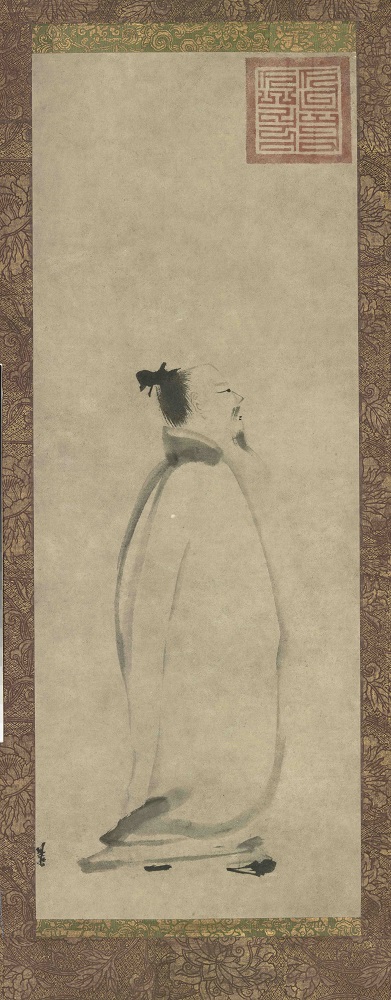
Nor does expressive freedom dispense with exacting study. Qi Baishi had carved intricate designs as a woodworker and painted insects in fine detail. He revised his way of painting shrimp over decades before he could suggest their translucent bodies with a few apparently casual marks. Qi’s advice was to move back and forth between painting from life and painting expressively, so that neither the creature’s form nor its spirit was lost.
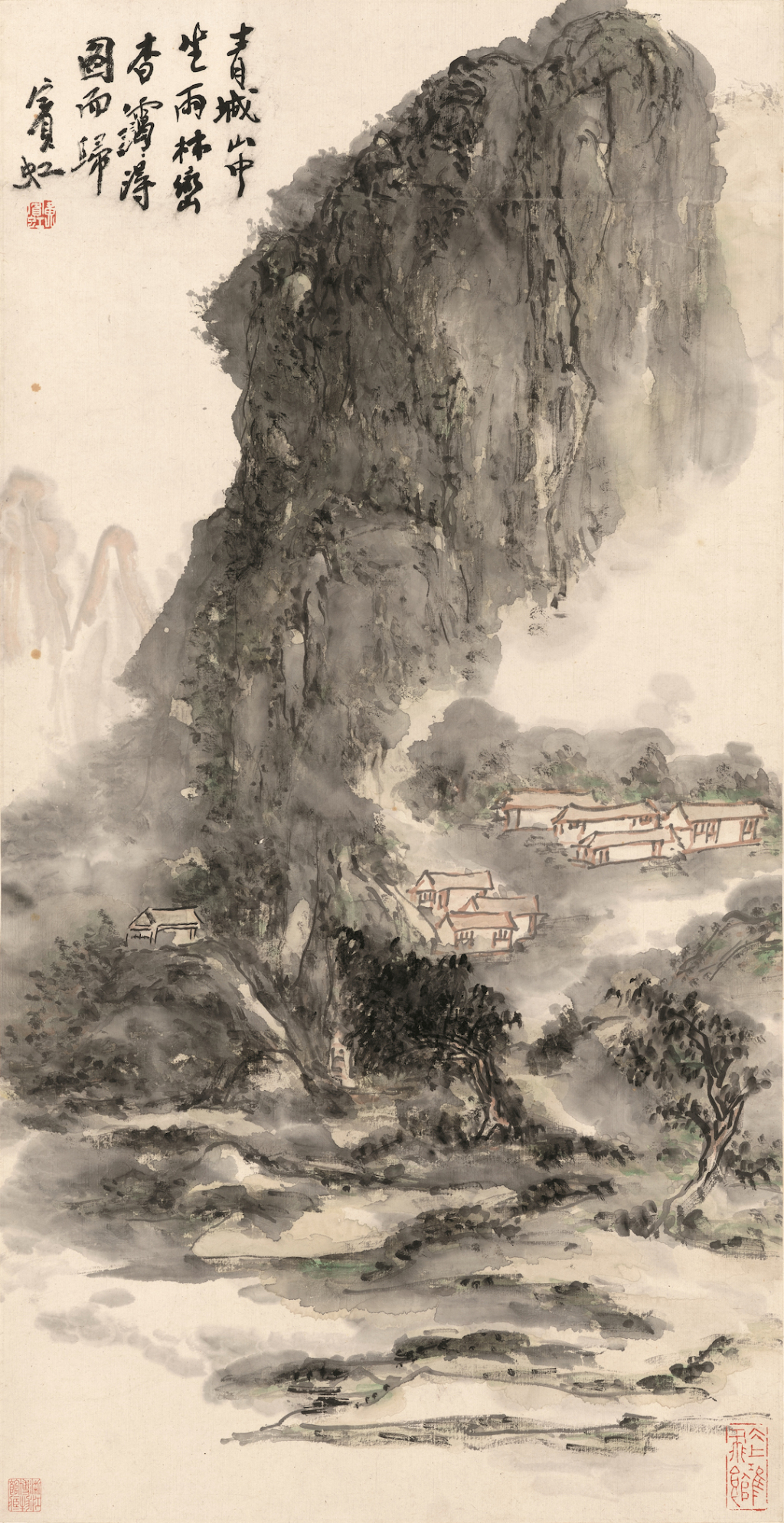
The opposite case is equally revealing. Huang Binhong’s late landscapes are dense with overlapping strokes and layers of ink. The critic Fu Lei nevertheless described them as xieyi. In the speaker’s account, Huang was not recording the contours of a particular mountain. He built up ink until the landscape on paper corresponded to the one in his mind. His densely worked mountains and Bada Shanren’s spare compositions thus pursue a similar end by different means.
Independence in a painted line
The roundtable coincided with the 400th anniversary of Bada Shanren’s birth. Nanchang held commemorative events in July 2026, and the Shanghai Museum was scheduled to open a special exhibition on December 19. The speaker suggested that growing public interest in museum exhibitions helped explain why a discussion of brushwork had reached so many people beyond the art world. But the speaker also heard an uneasier question in the debate: whether the independence associated with literati painting was itself in short supply.
To explain how that quality might become visible, the speaker recalled the painter Zhu Baoqing. At 70, Zhu still drew relatively thin lines; after 80, his strokes grew thicker, rougher and less fluid. The speaker attributed the change not to age alone but to decades of reading, writing and reflection. Zhu’s own late notes put the point in terms of purpose rather than style. Every painter, he thought, had to ask why they painted at all. For him, the highest use of painting was the freedom it afforded the person holding the brush.