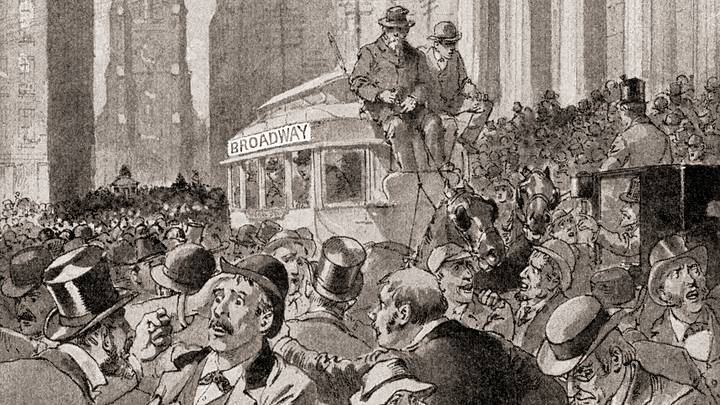
The first Black Friday fell on September 24, 1869, when the U.S. gold market crashed. The name’s connection to Thanksgiving came much later, in 1950s Philadelphia, where it described a difficult shift for police officers rather than a profitable day for shopkeepers.
The gold sale that broke the scheme
Wall Street financiers Jay Gould and Jim Fisk were buying up gold. They planned to drive up the price and sell at a profit, but a sale from the government’s own gold reserves could spoil their plans. Through Abel Rathbone Corbin, President Ulysses S. Grant’s brother-in-law, they persuaded Grant to hold off on selling. General Daniel Butterfield, who became assistant U.S. treasurer with Corbin’s backing, promised to keep the financiers informed about government gold transactions.
When Grant learned of Corbin and Butterfield’s involvement, he ordered the government to sell $4 million in gold. The price fell from $160 to $133. According to the Federal Reserve Bank of New York, the stock market fell 20 percent, and brokerage houses went bankrupt. Corbin was among the investors who had borrowed to buy gold at the higher price and could no longer repay their loans.
Gould had already sold his gold without telling Fisk. Neither man served time in prison for the scheme.
A football crowd gives the name a new meaning
According to History, visitors poured into Philadelphia on the Friday after Thanksgiving in the 1950s for the annual Army–Navy football game. Police worked extra shifts to manage the crowds, and shoplifting added to their workload. The day became known locally as Black Friday. In 1961, city officials tried calling it “Big Friday,” but the new name didn’t stick.
In the 1980s, retailers kept the familiar name and offered a different explanation: holiday discounts brought in enough business to move stores from the red, signifying a loss, into the black, signifying a profit. That accounting story was a later interpretation, not the reason Philadelphians first used the term. The retail name has since outgrown the day itself, with online and in-store sales starting weeks before the Friday after Thanksgiving and continuing for days afterward.