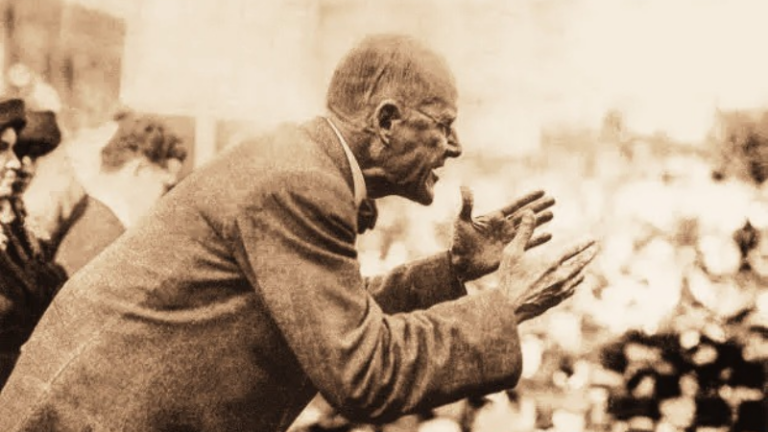
In September 1877, Eugene V. Debs opened the national convention of the Brotherhood of Locomotive Firemen in Indianapolis by telling delegates that their union did not encourage strikers. At 21, Debs believed railroad workers could earn better pay and greater respect by showing employers how dependable they were. The railroads had even given delegates free passage to the convention. To Debs, that gesture was evidence that cooperation worked.
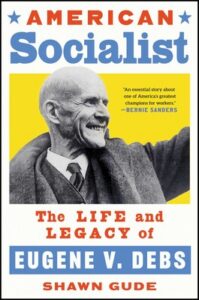
In American Socialist: The Life and Legacy of Eugene V. Debs, Shawn Gude uses the speech to pose a question about the future socialist leader: how did a man who expected employers to reward workers for their restraint come to believe that workers had to challenge corporate power?
The delegates knew the risks of railroad work. Firemen shoveled coal into locomotive fireboxes that could explode. Their union magazine regularly carried news of men killed or maimed on the job. Shifts could last 12 to 24 hours, sometimes longer, and workers lived near the yards so they could leave at short notice. Yet four years after the Panic of 1873, the prospect of unemployment still made many workers reluctant to contest a wage cut.
That summer, tens of thousands of railroad workers had walked out from the East Coast to the Corn Belt, and hundreds of thousands of workers in other trades had joined them. President Rutherford B. Hayes sent troops to suppress the unrest. Troops and militias fired on protesters; violence spread, and railroad property burned. The walkout, known as the Great Upheaval, was the first of its size in the United States. Debs’s speech that September put him at odds with the strikers whose cause his later admirers might have expected him to share.
Thirty-five years later, the socialist movement Debs led had strongholds from Wisconsin to Washington. Oklahoma tenant farmers traveled hundreds of miles by wagon to hear him speak; immigrant garment workers in Chicago also counted themselves among his supporters. At one point, about 1,200 Socialists held elected office nationwide, including 80 mayors across 36 states. Debs received about a million votes for president while in prison.
For Gude, those figures capture only part of Debs’s influence. Debs presented socialism to American audiences as an extension of democratic struggles they already knew, including the fight against monarchy and the movement to abolish slavery. By the end of his life, he was calling for organized resistance to Jim Crow and urging young men not to fight wars for the benefit of profiteers. Where the young fireman had asked how workers might win their employers’ respect, the older Debs asked why employers should have so much power over workers’ lives in the first place.