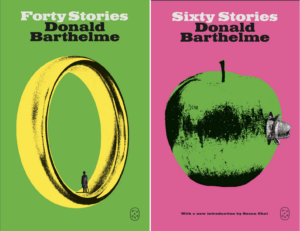
When Picador reissued two Donald Barthelme collections in May 2026, Lauren Oyler was struck by how little critical attention they seemed to receive. Her essay is one of five reviews in Book Marks’ November 25 selection, alongside readings of Don DeLillo’s hockey fiction, Daniel Duane’s Yosemite memoir, Daisy Johnson’s family novel and Sophie Kinsella’s Confessions of a Shopaholic.
Lauren Oyler on Donald Barthelme’s Sixty Stories and Forty Stories
Barthelme published 129 stories in The New Yorker before his death in 1989 and chose the contents of both collections himself. Writing in Harper’s, Oyler argues that classroom favorites such as “The School” and “The Balloon” give a partial impression of his work. Elsewhere, a character can disappear without explanation, or a conversation can go on without the reader knowing who is speaking. For Oyler, the pleasure lies partly in what readers do with that uncertainty: a reference can send them looking outside the story rather than back through it for a single meaning that explains everything.
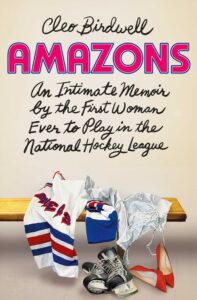
S. C. Cornell on Don DeLillo’s Amazons
In The New Yorker, S. C. Cornell finds an unusual sports protagonist in Cleo, a hockey player whose ability to compete with men is never in doubt. Off the ice, she gives her job about as much thought as a store manager gives work after a shift. The comedy comes instead from DeLillo’s dialogue and Cleo’s awareness of her own habits: after two chapters end in sex, she wonders aloud how else she might end one. Cornell welcomes the reissue less for what the book reveals about hockey or greatness than for how much fun it is to read without the promise of a grand payoff.
Blair Braverman on Daniel Duane’s Yosemite Falls
In The New York Times Book Review, Blair Braverman considers how Duane brings his climbing memoir together with a history of Indigenous genocide in Yosemite Falls: Reckoning with California History and the Gospel of John Muir. On one attempt to hike the 200-mile John Muir Trail, Duane weighs down his pack with Moby-Dick and religious texts, hoping they might help him understand his life. Braverman sees ego, denial and ideas about masculinity at work both in Duane’s account of his family and in the histories people tell about the park. Reading them together, she argues, changes what a visitor might see in the same mountain.
Ron Charles on Daisy Johnson’s Long Wave
An abandoned girl appears long before readers learn what happened to her mother. For Ron Charles, writing on his Substack, that delay offers a clue to the title of Johnson’s novel. A young radio host explains that a signal can take different routes and arrive at different times; Johnson lets events reach the reader in much the same way. Across three generations marked by poverty, loneliness and depression, Charles finds that the broken chronology conveys how children live with the effects of experiences they do not yet understand. What moves him is the tenderness that persists alongside the mothers’ dread.
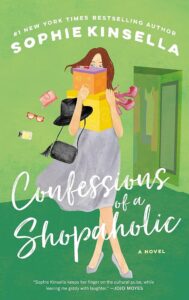
Lily Meyer on Sophie Kinsella’s Confessions of a Shopaholic
Revisiting the novel in The Atlantic 25 years after its US publication, Lily Meyer finds Becky Bloomwood’s warmth and mounting debt familiar, even as the department stores and swiped credit cards place her in an earlier era of shopping. Becky does most of her shopping alone, and some of her most revealing conversations are with things she wants to own. Meyer suggests that this helps explain why the film adaptation, starring Isla Fisher, struggled to capture the novel’s appeal. A mannequin can talk back to Becky on screen; on the page, what matters is hearing Becky supply her side of a conversation that no purchase can return.