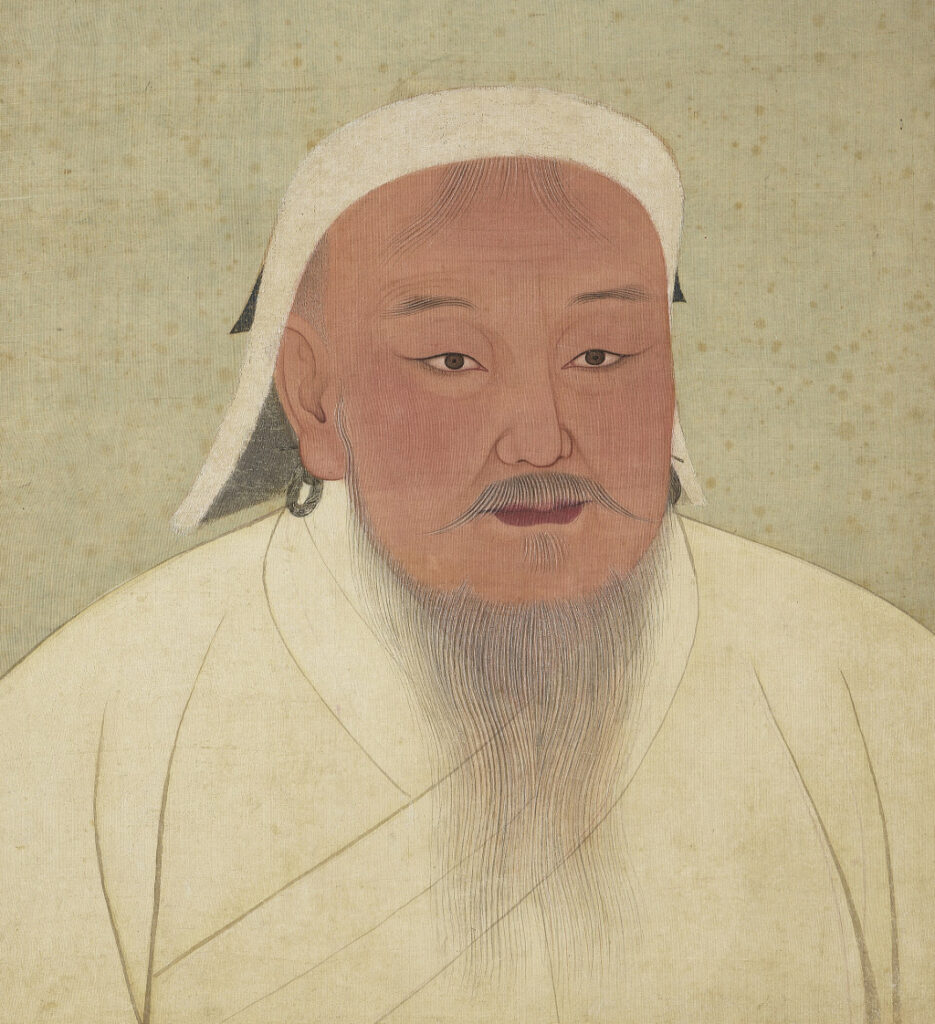
Genghis Khan died on August 25, 1227, during his campaign against Western Xia, according to Yu Dajun’s Biography of Genghis Khan, published in October 2026. Yu’s account connects his final illness with a riding injury, his instructions to his sons and the later loss of any identifiable grave.
In early 1226, Genghis Khan fell from his horse while hunting wild horses on the way to campaign against Western Xia. Yu writes that he was seriously injured and feverish, but chose not to withdraw after receiving a defiant response from a Western Xia minister. After more than a year of campaigning, he fell ill at Qingshui County in 1227. Yu places his death in a camp at Xijiang, in Qingshui County, and gives his age as 66.
Before his death, Genghis Khan instructed his sons to recognize Ögedei as his successor and to uphold his laws, Yu writes. Succession had been discussed years earlier, before the westward campaign of 1219, when his sons Jochi and Chagatai agreed to support Ögedei.
Yu’s account says Genghis Khan’s body was taken back toward the Mongol heartland and buried in Qinian Valley near Burkhan Khaldun, a place he had previously named as a suitable burial site. It adds that trees and grass grew over the area until the original landmark tree and the grave could no longer be identified. This is an account of a burial place that became unrecognizable, not of competing claims over a known grave.