In a guide published on 5 August 2026, Psyche describes flow as a state of deep absorption in an activity: attention stays on the task, self-consciousness recedes, and time may seem to pass differently. The concept was developed by psychologist Mihaly Csikszentmihalyi, who studied people engaged in activities ranging from painting and chess to dancing and surgery.
Flow is not something you can simply switch on. The guide suggests creating conditions that make it more likely, particularly when learning or practising a skill:
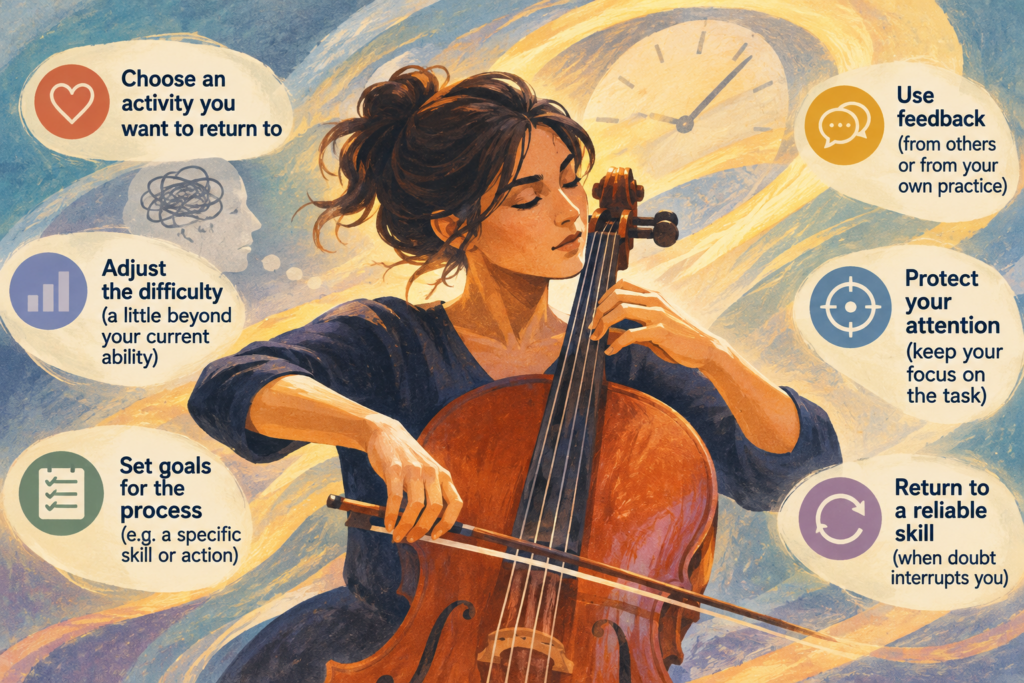
- Choose an activity you want to return to. Developing enough skill to become absorbed takes practice, which may be harder to sustain if you feel you ought to do the activity rather than want to do it.
- Adjust the difficulty. Aim for a challenge a little beyond your current ability. A task that feels too easy may become boring; one that feels too demanding may bring anxiety.
- Set goals for the process. Instead of aiming only to win a tennis match or play a piece of music perfectly, focus on a specific action, such as footwork or a difficult transition.
- Use feedback. A teacher or peers can help, but you can also notice what happens as you practise—for example, how a change in grip affects a tennis shot or where tension appears while playing an instrument.
- Protect your attention. Sustained focus on the task, especially on aspects within your control, is central to the experience the guide describes.
- Return to a reliable skill when doubt interrupts you. Rehearsing something you already know can help redirect attention from worry back to the activity.
The appropriate adjustment depends on the situation. You might make a familiar practice session harder to avoid boredom. If a challenge cannot be changed—such as a compulsory exam—the guide instead recommends identifying the skills it requires, preparing, and focusing on using those skills during the task. These steps may support flow; they do not guarantee it.