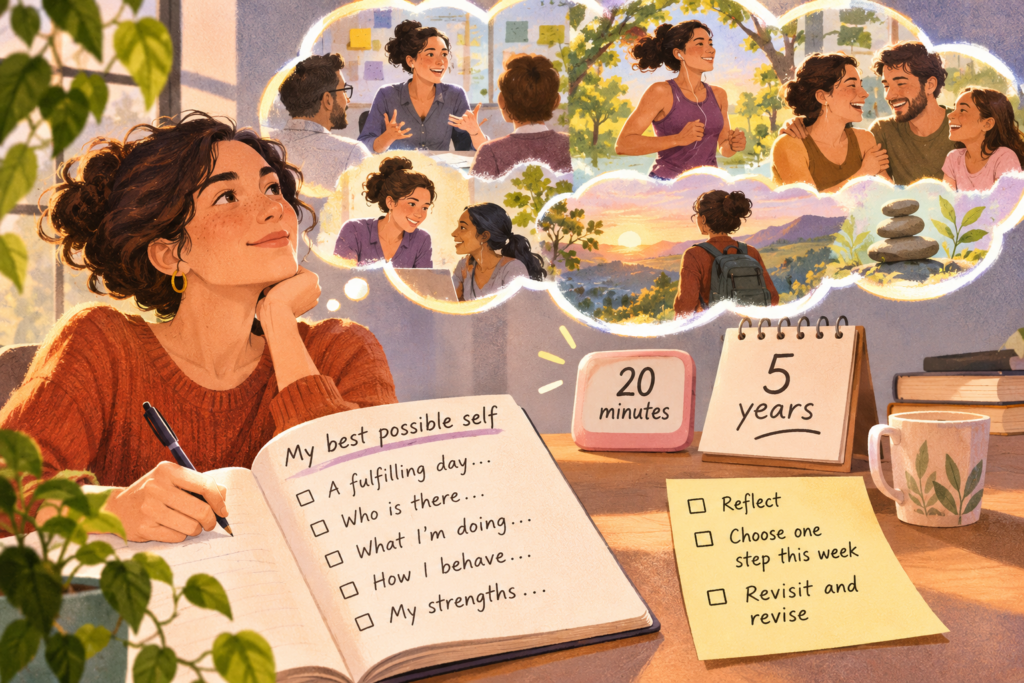
A Psyche guide published on 9 July 2026 describes the “best possible self” exercise: writing about a future in which your life has gone remarkably well, according to your own values, rather than someone else’s idea of success. Introduced by Laura King in the early 2000s, the exercise has been found in studies to improve positive mood and optimism. It is a way to explore direction, not a prediction that everything you imagine will happen.
To try it, set aside about 20 minutes and choose a time horizon. The guide suggests five years—long enough to picture change, but close enough to feel relevant. Write about specific moments in that future: what a fulfilling ordinary day looks like, who is there, what you are doing and how you behave. You might consider work, relationships, health, personal growth or contributions to others.
Pay attention to strengths as well as outcomes. You cannot practise getting promoted today, for example, but you can practise listening or leading in your current role. While drafting, let yourself explore possibilities without immediately judging whether every detail is realistic.
Afterward, reread what you wrote. Which parts surprised or moved you? Choose one element you could act on this week, even if the full vision feels distant. The guide also offers an optional exercise drawn from psychodrama: speak to an imagined future self in an empty chair, then switch seats and respond from that perspective. Its author presents this as an additional way to reflect, not a necessary part of the writing exercise.
Keep the description somewhere you can revisit it when making decisions. As your circumstances or values change, you can revise it. The aim is not to hold yourself to a fixed plan, but to clarify what matters to you and notice small ways to put it into practice now.